Building endurance, bone density and mental clarity through structured jump rope training and progressive skill progression for comprehensive physical fitness.
The best way to start any workout is with movement that wakes up your body without wasting time. A quick dynamic warm-up routine works wonders before you hit the floor with your rope. Move through each stretch without lingering — inner thighs, calves, quadriceps, hamstrings — giving each muscle just enough attention to prepare it for what is coming. You do not need a full ten minutes here. Thirty to forty seconds per stretch gets the job done and gets your blood flowing.
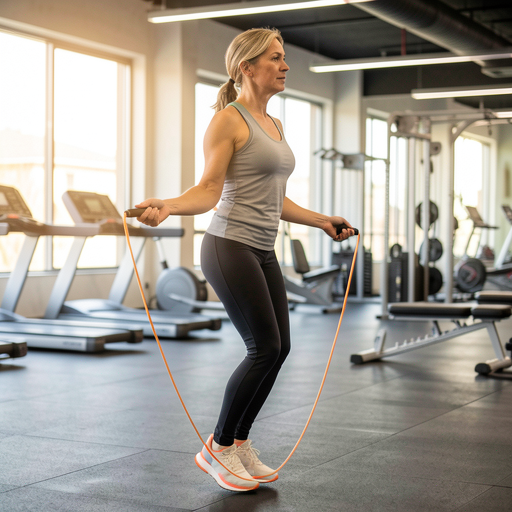
The goal is simple: loosen tight muscles, prime your joints and signal to your nervous system that it is time to work. This approach pairs perfectly with a training jump rope because your lower body takes a real pounding. When you skip, your calves absorb impact with every rotation, your quads fire to keep you bouncing lightly off the ground and your hamstrings and inner thighs stabilize each landing. If those areas are stiff and cold, you are asking for discomfort or worse. A fast round of stretches removes that stiffness so your first minute of skipping feels smooth and controlled.
🧠
You will find yourself staying on the ball of your foot rather than slamming down and your rhythm improves almost immediately. Building a habit of pre-rope stretches does not have to feel like a chore. Set a timer, move through the sequence and count your seconds. Once you have the routine down, it takes less than three minutes. The payoff shows up in how you feel during and after your session.
🏊♀️
Jumping rope becomes more about skill and endurance than just grinding through sore muscles. You stay lighter on your feet, maintain better form and push yourself harder because your body actually feels ready. Over weeks and months, that consistency adds up. Your calves adapt, your ankles strengthen and you can handle longer intervals without the usual aches that make people quit. If you are new to skipping, start with short intervals and let your warm-up do the heavy lifting.
🐐
Two or three minutes of steady jumping followed by a break is plenty when you are building up your fitness. As your stamina grows, extend those intervals and experiment with different styles — double unders, criss-crosses or high knees — all of which demand more from the same muscle groups. Keep the stretching routine intact. It is one of the simplest ways to protect yourself and stay consistent, which is what separates the people who stick with skipping from the ones who drop it after a few weeks.